Small Crochet Projects: 25 Quick Ideas
Small crochet projects are the sweet spot when you want a relaxing make that actually gets finished. They are portable, budget-friendly, and perfect for practicing new stitches without committing to a blanket. In this guide, you will get 25 quick ideas plus practical tips on yarn choice, hook sizes, clean finishing, and easy customization. If you are brand new, you may also like this roundup of crochet basics for beginners and the companion list of easy beginner crochet project ideas for even more confidence builders. Most of the projects below use simple stitches like chain, single crochet, and double crochet, and many can be completed in under an hour using leftover yarn from your stash.
What you need to get started
You do not need a huge setup to begin small crochet projects, but a few well-chosen tools make everything smoother and your results neater. Here is a practical starter kit and why each item matters:
- Yarn: Worsted weight (category 4) acrylic or cotton is easiest to learn on because the strands are visible and forgiving. Cotton is ideal for coasters and face scrubbies because it is absorbent and heat tolerant.
- Crochet hooks: A 5.0 mm (H/8) hook is a friendly “default” for worsted yarn. If your hands tire easily, try an ergonomic handle.
- Tapestry needle: Essential for weaving in ends securely so items survive washing and daily use.
- Scissors: Sharp craft scissors help prevent frayed ends, especially on cotton.
- Stitch markers: Use them to mark the first stitch of a round, track repeats, or hold a loop if you pause mid-project.
- Measuring tape: Helps match sizes for items like headbands or pouches.
Before you start, take two minutes to set yourself up: pull yarn from the center of the skein if possible, choose a well-lit spot, and keep a small container nearby for yarn scraps. If your tools are always wandering, these craft room organization ideas for small spaces make it easier to keep hooks and notions in reach without clutter.
How much yarn and time small projects need
Most small crochet projects use 5 to 50 grams of yarn, depending on stitch density and size. A coaster may take 8 to 15 grams, a scrunchie 10 to 20 grams, and a small pouch 25 to 60 grams. Time-wise, many items fall into three buckets: 15 to 30 minutes (appliqués, hearts), 30 to 60 minutes (coasters, bookmarks), and 1 to 2 hours (pouches, small baskets). If you are learning, plan extra time for counting stitches and redoing a row. Speed comes naturally once your tension and muscle memory settle.
25 ideas and projects to try
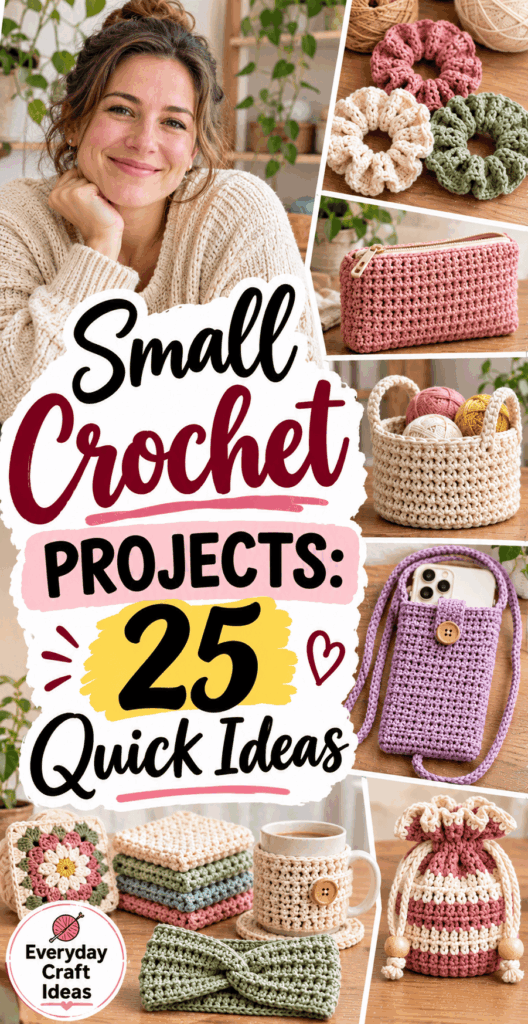
Below are 25 small crochet projects that work well for beginners and still feel satisfying for experienced makers. For each idea, you will see the typical use, suggested yarn, and a quick note on construction so you can pick the right match for your time and skill.
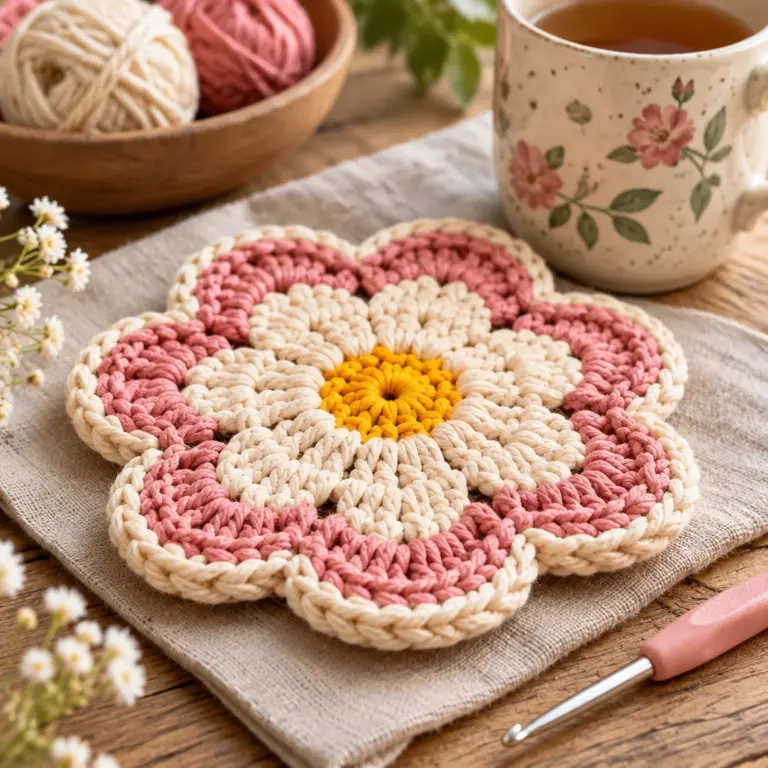
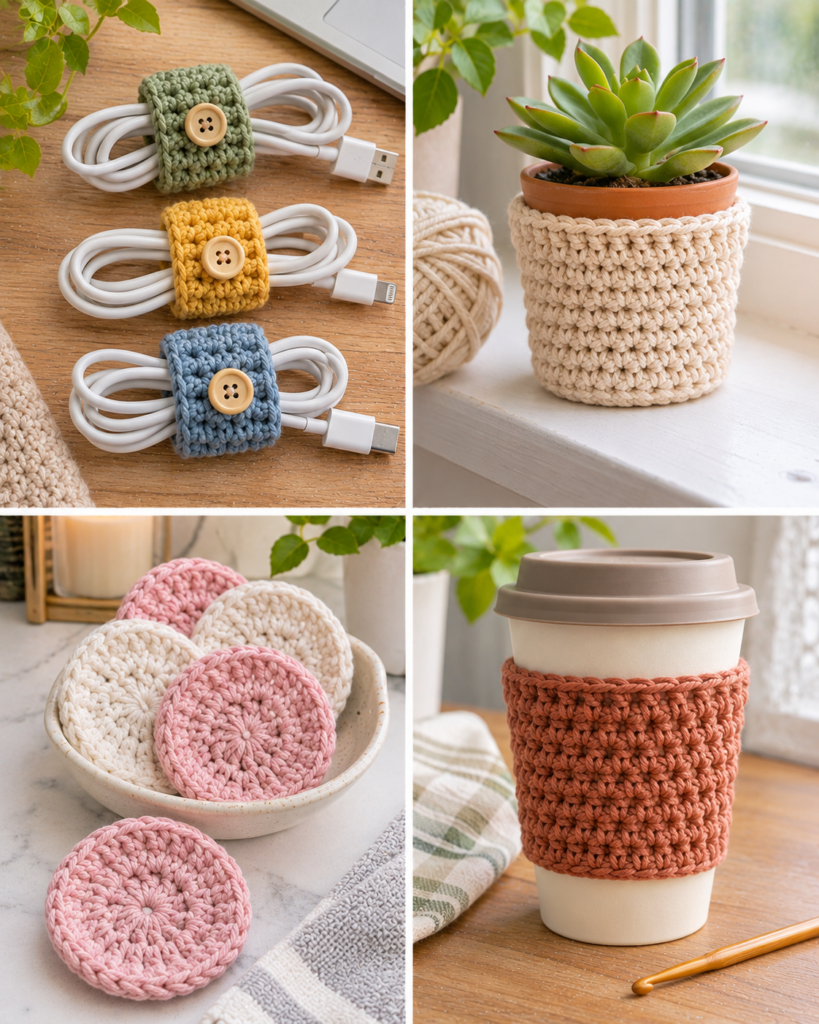
- Classic round coaster: Cotton yarn, worked in the round with double crochet for speed.
- Square mug rug: Slightly larger than a coaster, great for practicing straight edges.
- Ribbed cup sleeve: Single crochet in back loop only for a stretchy rib texture.
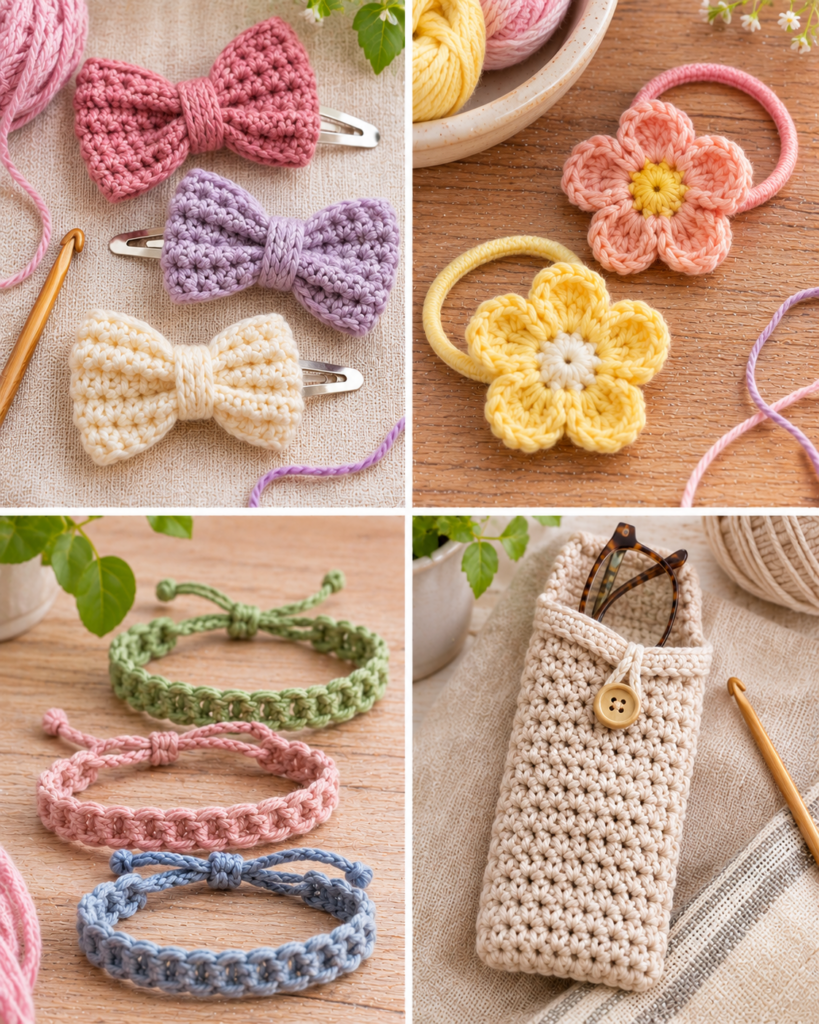
- Simple bookmark: A long strip of single crochet or a filet-style pattern.
- Shell stitch bookmark: Looks fancy but repeats are easy once learned.
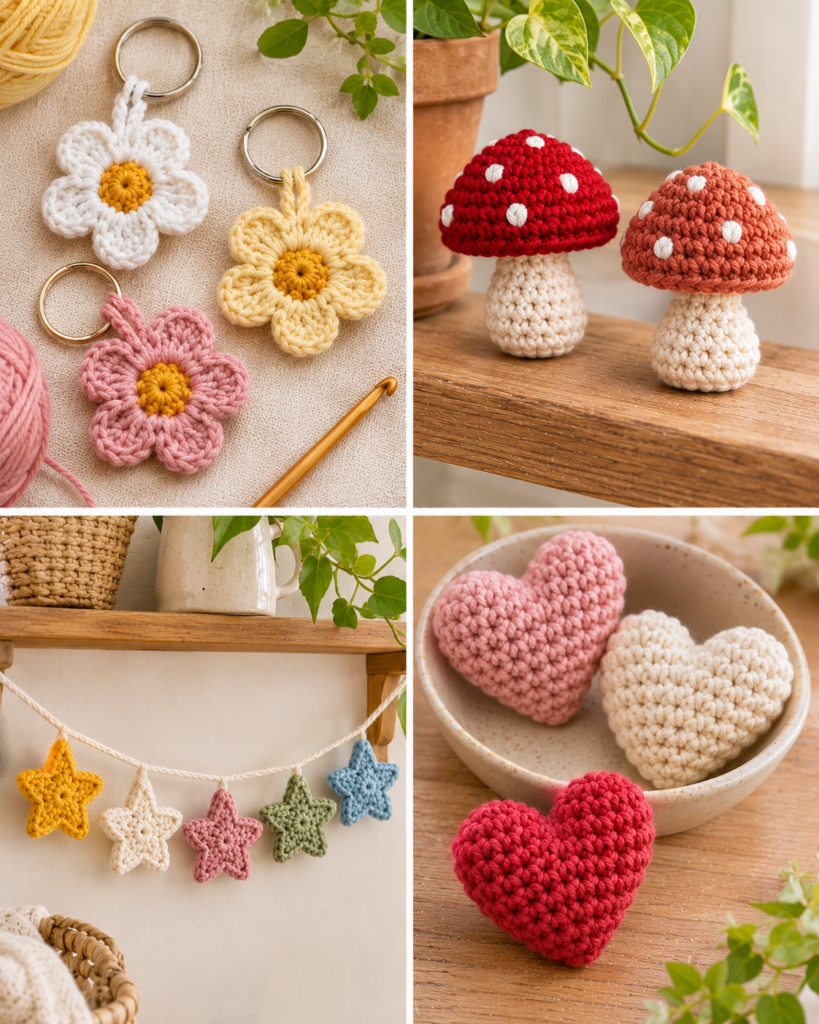
- Heart appliqué: Quick round-based shaping, perfect for gifts.
- Star appliqué: Practice increases and points using chain spaces.
- Mini flower: Use chain loops and petals in double crochet.
- Leaf appliqué: Great for learning working into both sides of a chain.
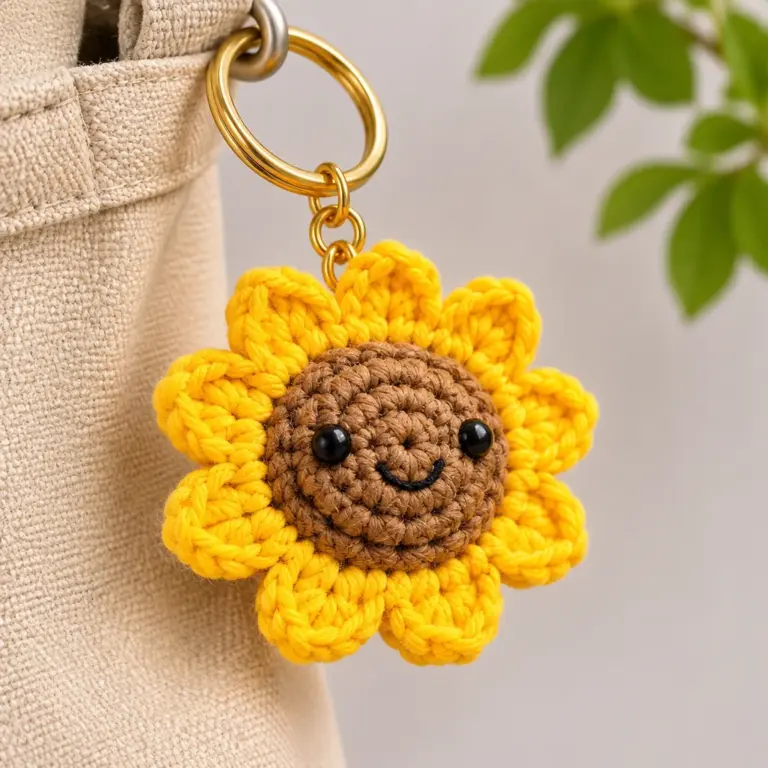
- Keychain tab: A tight single crochet strap around a key ring.
- Amigurumi mini ball: Single crochet in a spiral, learn invisible decreases.
- Worry stone cover: Crochet a small “pocket” over a smooth pebble for texture.
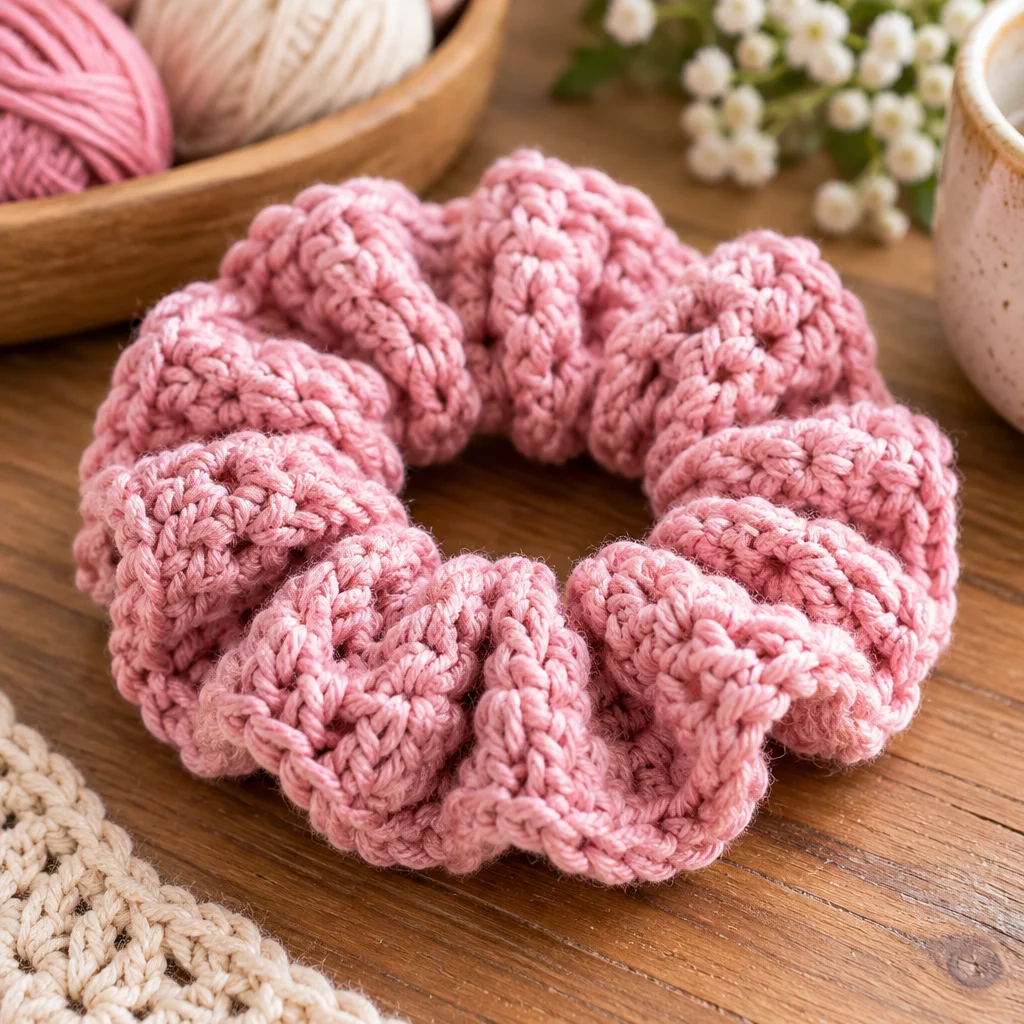
- Scrunchie: Crochet around a hair elastic using double crochet.
- Twist headband (ear warmer): A rectangle seamed with a simple twist.
- Phone grip charm: Tiny motif attached to a loop, keep it light.
- Gift card envelope: Two rectangles stitched together with a flap.
- Coin pouch: Small flat pouch with a button closure.
- Drawstring sachet: Great for lavender or soap scraps, use cotton.
- Mini basket: Use two strands held together for firmness.
- Plant pot cozy: A sleeve in the round, adjust height to fit.
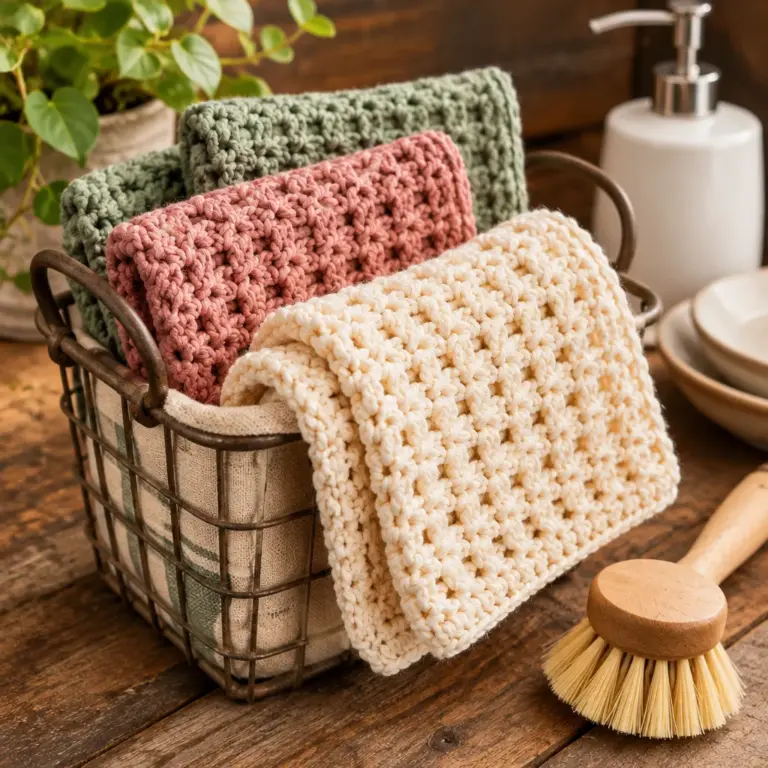
- Face scrubbies: Cotton circles, add a hanging loop.
- Soap saver bag: Meshy stitches for lather, drawstring top.
- Water bottle holder: Net-style body plus a strap, quick and practical.
- Granny square: One square is a mini project and a building block.
- Patchwork key fob: Tiny granny square folded and stitched for a puffed look.
These small crochet projects are also excellent “try-it” makes for new stitches. If one item does not turn out perfectly, you have not spent days on it, and you can immediately apply what you learned to the next piece.
Coasters, keychains, hearts, flowers, scrunchies, bookmarks, appliqués and pouches
If you want the most variety with the least yarn, focus on flat shapes and simple tubes. Coasters and mug rugs teach consistent tension and counting. Keychains teach durability: tight stitches, strong joining, and secure ends. Hearts, flowers, and appliqués teach shaping and working into chain spaces. Scrunchies and headbands introduce working around an elastic or seaming a rectangle cleanly. Bookmarks help you practice straight edges and turning chains without widening or narrowing. Pouches pull it all together: you practice two panels or rounds, then seam, add a button, zipper, or drawstring.
A practical tip for all of these: use the right fiber for the job. Cotton for items that get wet or hot (coasters, soap savers, scrubbies), acrylic or wool blends for accessories (headbands, flowers, keychains). When making pouches, choose a stitch pattern with minimal holes (single crochet, half double crochet) so coins or lip balm do not sneak out. For appliqués, consider a smaller hook than the yarn label suggests to keep edges crisp and reduce curling.
How to make and customize the projects
Many small crochet projects follow the same core workflow: choose yarn and hook, make a foundation, work the body, then finish with tidy edges and secure ends. The details below will help your results look polished even if you are new.
- Pick the function first: Decide how the item will be used (washed often, worn, held in a pocket). This determines fiber choice and stitch tightness.
- Choose a matching hook size: For firm items like keychains and pouches, go down 0.5 to 1.0 mm for denser fabric. For drapey items like scrunchies or net holders, follow the yarn label.
- Start with a clean foundation: If your starting chain twists, go up one hook size just for the chain, or try a foundation single crochet for straighter edges.
- Count stitches at the end of each row or round: Most “mystery shape” problems come from accidental increases or missed stitches.
- Finish edges on purpose: A simple single crochet border or a slip stitch round can prevent curling and make shapes look intentional.
- Weave in ends for real durability: Thread the tail through the tapestry needle and weave through several stitches in at least two directions, then trim. For slippery yarn, weave a little extra.
Customization is where small crochet projects really shine. Add stripes using leftovers, swap a scalloped edge onto a coaster, or sew a small appliqué onto a plain pouch. If you want to branch into slightly bigger accessories, these beginner-friendly crochet bag patterns can help you scale up without feeling overwhelmed.
Fastest projects for first-time crocheters
If this is your first week of crochet, choose projects with minimal shaping and very repetitive stitches. Good first picks include a flat coaster in double crochet, a simple bookmark in single crochet, a scrunchie worked around an elastic, and a basic heart appliqué. Keep the stitch count small so you can correct mistakes quickly.
To make success more likely, avoid super dark yarn (harder to see stitches) and fuzzy novelty yarn (hard to insert the hook). Work in bright light and pause every few rows to lay your piece flat. If it is ruffling, you likely added stitches. If it is pulling into a bowl, you likely missed stitches or your tension tightened.
Using leftover yarn and selling or gifting finished items
Small crochet projects are perfect stash busters. Sort leftovers by fiber and weight first so you do not accidentally combine scratchy wool with a face scrubby plan. Small amounts go far when used as stripes, borders, or appliqués. If you want coordinated gifts, pick a theme: a set of four coasters plus a matching mug sleeve, or a pouch with a tiny heart appliqué in the same color.
If you plan to sell, aim for consistent sizing and neat finishing. Make one “prototype,” write down your hook size, stitch count, and finished measurements, then repeat. Price with materials plus time in mind. Also keep it honest in listings: note fiber content and care instructions (hand wash vs machine wash). For a practical next step that can sell well, consider an easy market-style tote from this easy crochet bag pattern collection, then offer mini matching items like key fobs or coin pouches as add-ons.
“I started with the coaster idea using cotton yarn, and it actually lay flat on my first try after I counted stitches each round. Then I used the leftover yarn to make two matching scrubbies as a quick gift. Finishing the ends neatly made the biggest difference.”
Supplies, cost, time and skill level
One reason small crochet projects are so popular is the low barrier to entry. A single hook, one skein of yarn, a needle, and scissors can produce many finished pieces. Cost depends on fiber: acrylic is usually the most affordable, cotton is slightly more, and wool blends can cost more but feel lovely for accessories. If you are buying yarn just for practice, choose a light or medium color so you can clearly see your stitches.
Time and skill scale predictably. Flat rectangles and circles are beginner-friendly and fast. Shaping projects like hearts and flowers are still beginner accessible but require careful counting. Pouches add construction skills: seaming, adding closures, and planning size. If you can chain, single crochet, and double crochet, you can complete most items on the list.
As a rough planning guide, expect 20 to 40 minutes for most appliqués and bookmarks, 30 to 60 minutes for coasters and scrunchies, and 60 to 120 minutes for pouches and small baskets. If your hands get sore, take breaks and stretch your fingers and wrists. Pain is a signal to pause, not push through.
Beginner mistakes and troubleshooting
- Edges getting wider: You may be crocheting into the turning chain as if it were a stitch. Decide whether your pattern counts it, and be consistent. Use a stitch marker in the first and last stitch of each row until it clicks.
- Coaster won’t lay flat: Ruffling means too many increases; cupping means too few. If you are working in the round, keep increases evenly spaced and check your count each round.
- Holes in pouches: Choose a denser stitch (single crochet) and consider a smaller hook. You can also line the pouch with fabric if you want a polished interior.
- Twisted starting chain: Work the first row slowly, keeping the chain flat, or try foundation stitches. Blocking can help a little, but preventing the twist is easier.
- Ends popping out: Weave in longer tails, change direction while weaving, and avoid trimming too close. For slippery yarn, weave through more stitches.
Frequently Asked Questions About Small Crochet Projects: 25 Quick Ideas
What can I crochet in an hour?
In an hour, most people can finish several small crochet projects such as a coaster, a simple bookmark, a scrunchie, a heart appliqué, or two face scrubbies. Choose worsted cotton or acrylic and a comfortable hook size so you are not fighting your tools. If you are new, pick a repetitive stitch like single crochet and keep the stitch count small. Plan 10 minutes at the end for weaving in ends and smoothing the edges.
What can I make with scrap yarn?
Scrap yarn is ideal for stripes, borders, and tiny motifs. Try flowers, hearts, stars, mini granny squares, keychain tabs, and appliqués you can sew onto hats, bags, or pouches. For very small amounts, make a two-color bookmark or a set of mixed-color scrubbies. Just keep fiber in mind: cotton scraps are best for items exposed to heat or water, while acrylic scraps are great for decorative pieces and keychains.
Which small crochet projects are easiest?
The easiest small crochet projects are flat shapes with minimal counting: a single crochet bookmark, a double crochet coaster, a simple ribbed cup sleeve, or a basic scrunchie crocheted around an elastic. These rely on a repeat you can memorize quickly. Avoid projects with lots of tight color changes or complex shaping until you are comfortable identifying stitches and keeping even tension. Using a light-colored yarn also makes learning much easier.
How do I stop my crochet from curling on small items?
Curling usually comes from tight tension, an overly small hook, or uneven increases in the round. First, try going up one hook size and consciously relaxing your grip. For circles, confirm that your increase pattern matches the stitch type. Adding a simple border round of single crochet can help flatten edges, and light blocking works well for cotton. If you block, let the item dry fully before using it, especially for coasters.
Do I need to block small crochet projects?
You do not always need to block, but it can make small crochet projects look more professional. Blocking is helpful for appliqués (crisper points and petals), bookmarks (straighter edges), and coasters (flatter circles). Cotton responds well to steam or wet blocking. Acrylic can be gently steam-blocked with care, but do not touch a hot iron directly to acrylic since it can melt. If the item will be washed regularly, prioritize good tension and finishing first.
What is the best yarn for coasters and scrubbies?
For coasters and scrubbies, choose 100 percent cotton or a cotton blend designed for dishcloths. Cotton is absorbent, handles heat better than acrylic, and washes well. Use a fairly dense stitch so liquids do not immediately soak through and so the fabric feels sturdy. Avoid fuzzy yarns that can pill or shed. For scrubbies, you can add texture with front post stitches or a simple raised pattern, but keep it comfortable on skin.
Final tips and next projects
Small crochet projects build skills fast because you repeat the fundamentals often: clean starts, consistent tension, accurate counting, and strong finishing. Keep a tiny notebook (or phone note) with your favorite hook sizes, stitch counts, and what you would change next time. When you want to level up, take one of the ideas here and add a simple twist: stripes, a border, a button, or a matching appliqué. If you have been enjoying these quick wins, your next step could be combining multiples, like turning granny squares into a pouch panel or making a coordinated set of coasters and a cup sleeve. Pick one project today, use yarn you already have, and enjoy the satisfaction of finishing something small and useful.