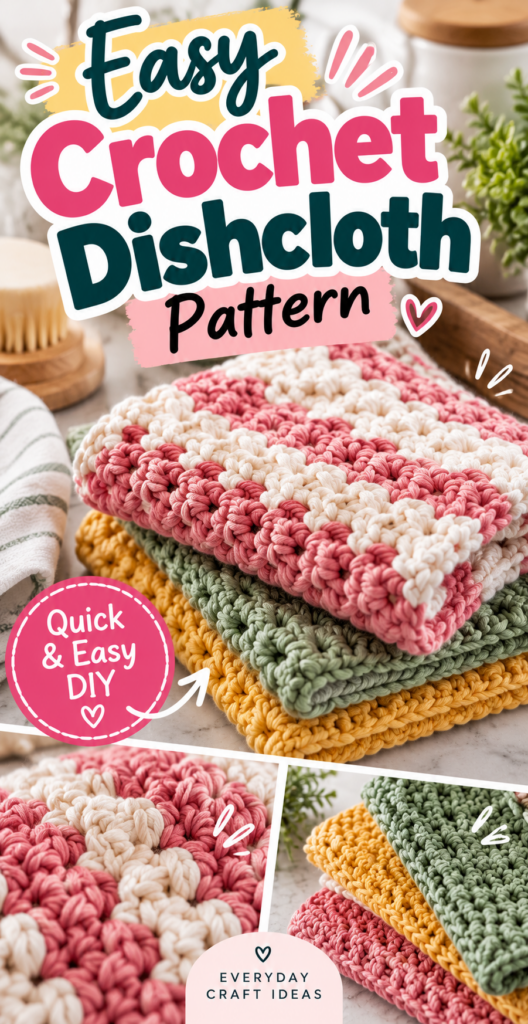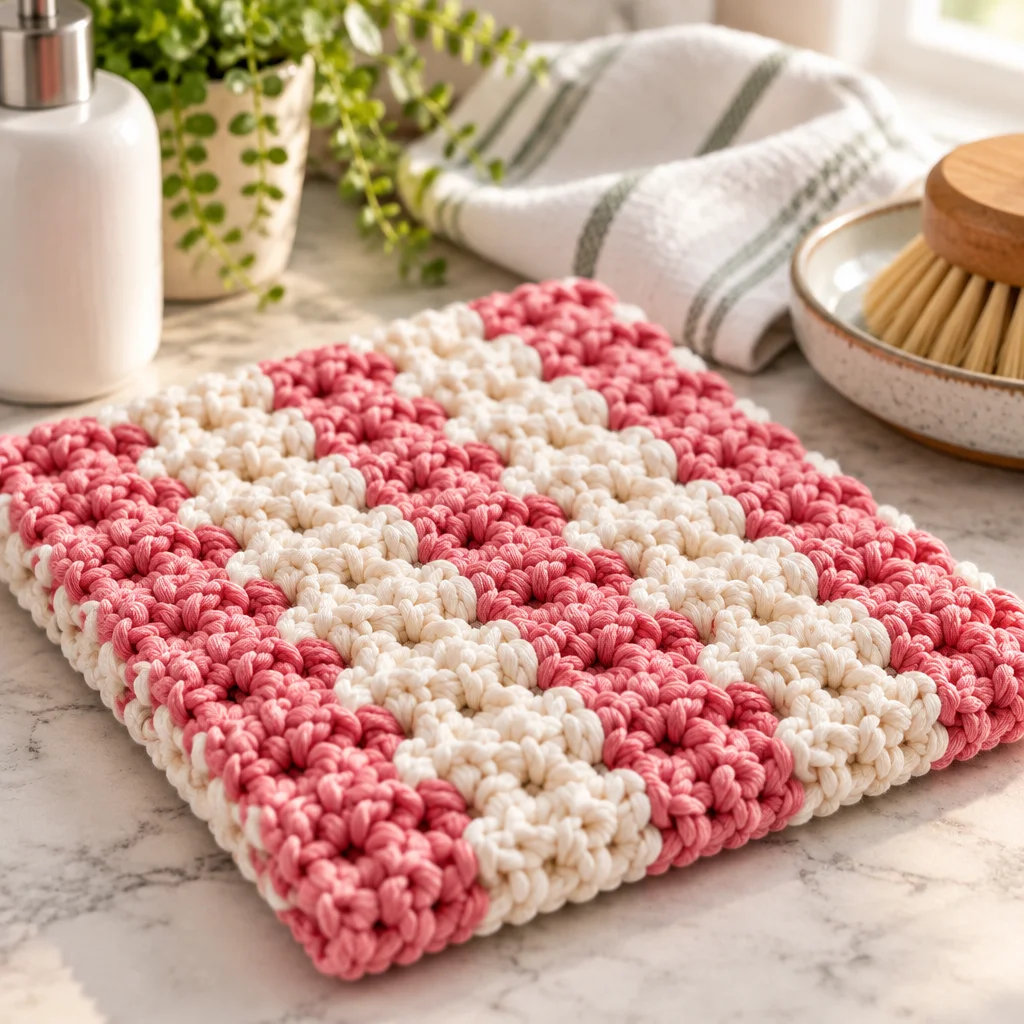
If you are searching for a reliable crochet dishcloth pattern that is truly beginner-friendly, practical, and quick to finish, this guide will walk you through every step. A handmade dishcloth is one of the most useful crochet projects you can make: it is small, affordable, and it teaches foundational skills like keeping straight edges, counting stitches, and working a simple border. In this tutorial, you will learn what yarn works best, how to choose a size, and exactly how to crochet a textured cloth that scrubs well without feeling stiff. I will also share troubleshooting tips (because everyone’s first dishcloth gets a little “creative”) and easy variations so you can make a whole stack for your kitchen or gifts.
Materials and Yarn
Before you start this crochet dishcloth pattern, gather supplies that make the process smoother and the finished cloth more functional. Dishcloths are worked tightly enough to hold up to friction, so the right hook and yarn combo matters more than you might think.
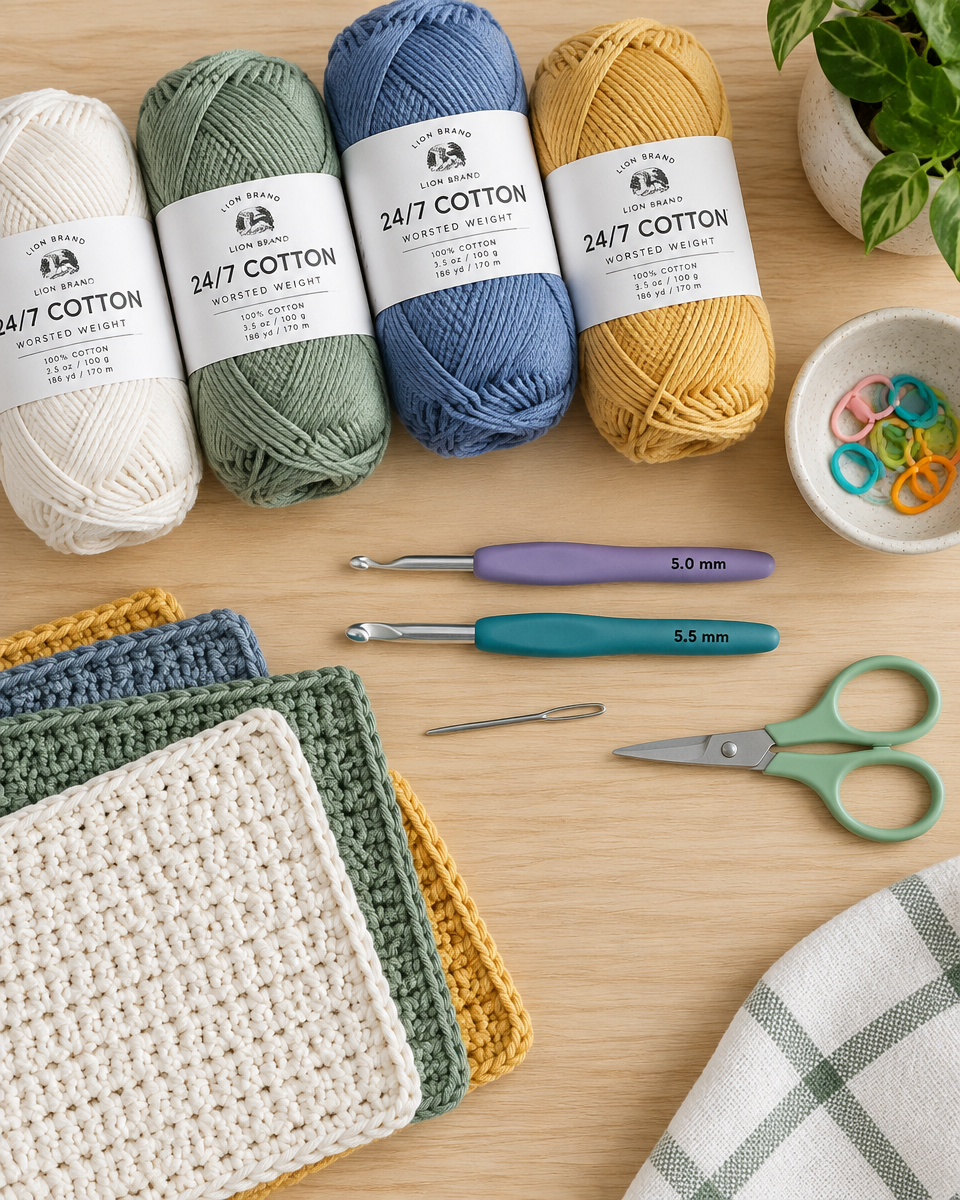
- Yarn: Worsted weight (category 4) cotton yarn is the classic choice. It is absorbent, washable, and handles hot water better than many synthetic fibers.
- Hook: A 5.0 mm (H/8) hook is a solid starting point for worsted cotton. If you crochet tightly, you may prefer 5.5 mm for easier stitching.
- Scissors: Small craft scissors are fine, but make sure they cut cotton cleanly so ends do not fray.
- Tapestry needle: Use a blunt yarn needle for weaving in ends neatly and securely.
- Stitch markers (optional): Helpful for marking the first and last stitch of each row, especially while learning to keep edges straight.
Preparation tip: pull a few yards of yarn into a loose “working pile” before you begin. Cotton cakes and skeins can tug and slow you down, and consistent tension is easier when the yarn feeds smoothly.
Best Yarn for Crochet Dishcloths
The best yarn for a crochet dishcloth pattern is almost always 100% cotton, but not all cotton behaves the same. For dishcloths, you want a balance: soft enough to handle comfortably, yet firm enough to scrub and hold its shape after washing.
Worsted cotton is a favorite because it works up quickly and creates a sturdy fabric. Many popular kitchen cottons are slightly “splitty,” meaning the strand can separate if your hook catches it. This is normal. If splitting frustrates you, choose a smoother, plied cotton rather than a very flat or loosely spun cotton.
Why cotton instead of acrylic? For an everyday kitchen dishcloth, cotton is usually the more practical choice because it is absorbent, washable, and works well for wiping and scrubbing. Acrylic can work for some cleaning projects, but it doesn’t absorb water the same way cotton does, so 100% cotton is the simpler choice for this pattern.
Color choices: Lighter colors show stains faster, but they also help you see your stitches while learning. Dark colors hide stains but can make stitch counting harder. A practical compromise is a medium shade: denim blues, sage greens, or heathered neutrals.
If you plan to use your dishcloth for heavy scrubbing, pick a cotton that feels slightly “crisp” in the skein. It will soften after a wash, but it will still have that scrubby backbone.
Crochet Dishcloth Size
You can make a crochet dishcloth in several sizes depending on how you plan to use it. The most common finished size is around 8 x 8 inches to 9 x 9 inches. This size is easy to fold, fits comfortably in your hand, and dries reasonably fast.
If you want something that functions more like a washcloth, you can go slightly larger, around 10 x 10 inches. If you want a quick “counter wipe,” a smaller square, around 7 x 7 inches, is fast to make and uses less yarn.
Size is controlled by two things:
- Your starting chain: More chains equals a wider dishcloth.
- Number of rows: More rows equals a taller dishcloth.
Because everyone’s tension is different, it is smart to think in terms of “make it square” rather than chasing an exact inch measurement. After you crochet a few rows, fold the fabric diagonally. If the corners line up, you are on track for a square.
Remember that cotton can relax slightly after washing. If your dishcloth looks a tiny bit small or stiff when finished, it often improves after one wash and air dry.
Easy Crochet Dishcloth Pattern
This crochet dishcloth pattern uses a simple texture that is beginner-friendly and effective for washing dishes: a mix of single crochet and double crochet worked in the same row. The result is a bumpy, scrub-ready fabric that still bends and folds easily.
- Skill level: Beginner
- Finished size: Approximately 8 to 9 inches square
- Yarn: Worsted weight (category 4) 100% cotton
- Hook: 5.0 mm (H/8), or a size that gives you comfortable tension
- Stitches used: Chain (ch), single crochet (sc), double crochet (dc), slip stitch (sl st)
- Starting stitch count: 30 stitches
- Turning chain: Chain 1; it does not count as a stitch
- Gauge note: Exact gauge isn’t critical for a dishcloth, but your tension will affect the finished size. If your starting rows are much narrower or wider than expected, adjust your hook size or starting chain before continuing. The goal is a dense but flexible fabric rather than an exact measurement.
Foundation
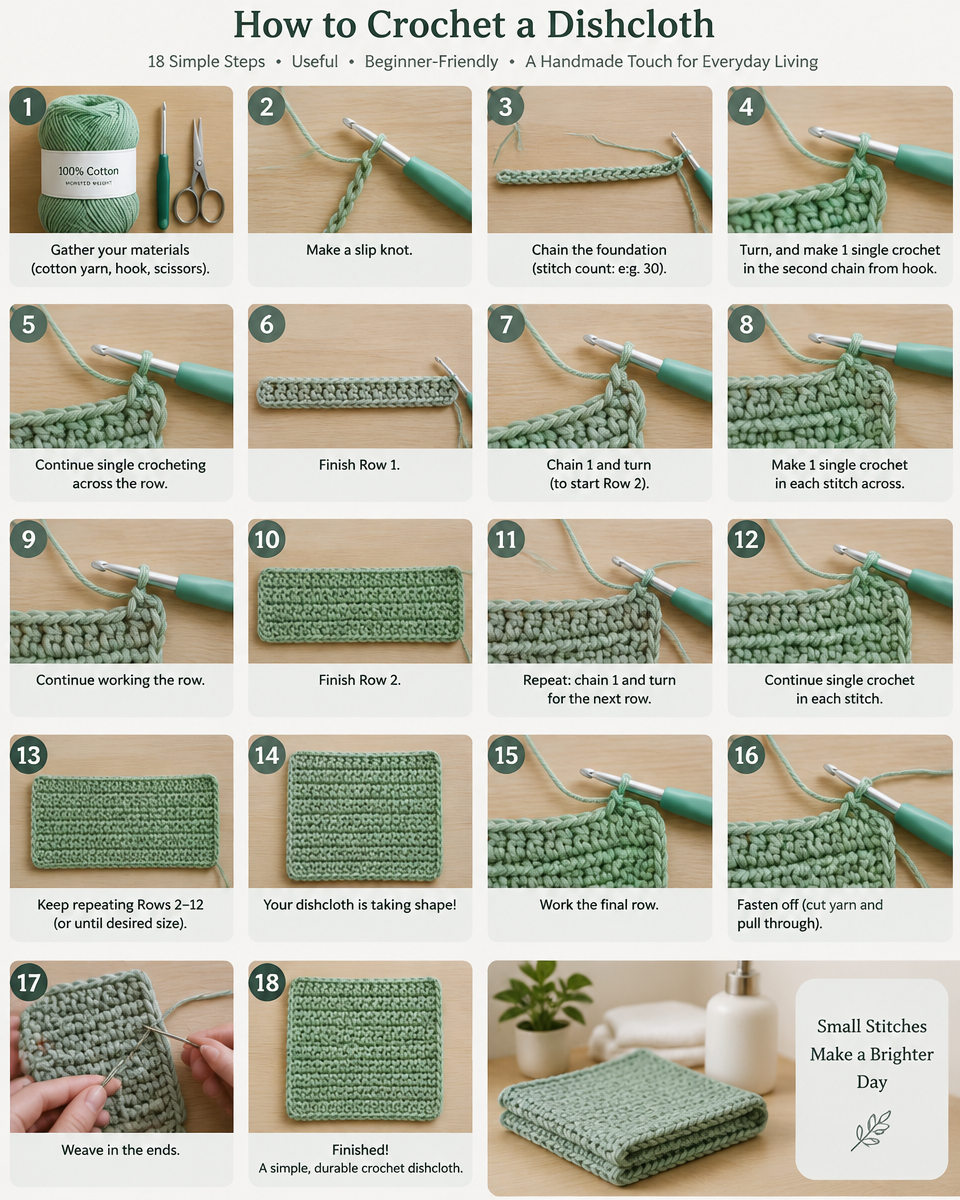
- Make a slip knot and chain 31. This creates a dishcloth that is typically about 8 to 9 inches wide in worsted cotton. If you want it wider, add chains in multiples of 2.
- Work 1 single crochet in the second chain from the hook. Skipping the first chain prevents a tight, puckered edge.
- Single crochet across the row. You should have 30 single crochet stitches. This first row acts as a clean base and makes the edges easier to recognize later.
Crochet the Main Rows
- Row 2: Chain 1 and turn. The chain 1 does not count as a stitch. Work 1 single crochet in the first stitch, then 1 double crochet in the next stitch. Repeat 1 single crochet, 1 double crochet across the row. You should still have 30 stitches.
- Row 3 and onward: Chain 1 and turn. Repeat the same sequence—1 single crochet in the first stitch, then 1 double crochet in the next stitch—across the row.
- Continue until the dishcloth is approximately as tall as it is wide. Depending on your tension, this will usually take around 26 to 30 rows including the foundation row.
Tip: Count your stitches at the end of every few rows. You should have 30 stitches across. If the sides begin getting narrower or wider, check that you aren’t accidentally skipping the first or last stitch.
Add the Border
- Do not fasten off. After your final row, chain 1 and rotate the work so you are crocheting along the side.
- Single crochet evenly around the entire dishcloth. Place about 1 single crochet per row along the sides. If you see gaps, add an extra single crochet occasionally to keep the edge smooth.
- Work 3 single crochet in each corner. This is important. The extra stitches allow the border to turn without curling.
- Join with a slip stitch to the first single crochet. This closes the round neatly.
- Optional second border round: If you want a thicker, more structured edge, chain 1 and single crochet around again, still placing 3 single crochet in each corner.
Finish and Weave In Ends
- Fasten off. Cut yarn leaving a 6 to 8 inch tail and pull through the loop.
- Weave in ends securely. Use a tapestry needle to weave the tail through several stitches on the back, changing direction once or twice. This prevents the end from working loose during washing.
- Optional blocking: If your dishcloth is slightly wavy, wet it, gently squeeze out excess water, lay it flat, and pat it into a square. Let it air dry fully.
Easy Ways to Customize Your Dishcloth
Once you’ve made the basic version, the easiest way to change the look is with color. Try a contrasting border, alternate two colors every few rows, or make a matching set in different shades.
You can also adjust the size by changing the starting chain and working until the cloth is square. Just keep the stitch pattern consistent across the row.
If you’re making several as gifts, use the same yarn and hook for the whole set so the finished cloths have a similar size and texture.
What Crochet Stitch Is Best for Dishcloths?
The best stitch for dishcloths depends on what you want it to do. For scrubbing power, you want texture and density. For wiping counters, you may prefer a flatter stitch with fewer ridges. In general, these are reliable options:
- Half double crochet (HDC): Simple, slightly denser than double crochet, and makes a nice “cushiony” cloth.
- Moss stitch (single crochet plus chain spaces): Creates a flexible fabric with great drape and attractive texture. It is also forgiving for beginners.
- Single crochet: Very sturdy and scrubby when worked with tight tension, but it can be slower and may feel stiff in thick cotton.
- Alternating single and double crochet: The stitch pattern used in this crochet dishcloth pattern. It is quick, textured, and beginner-friendly because you repeat the same two stitches.
Avoid very lacy stitches for dishcloths because open holes reduce scrubbing surface and can catch on utensils. Also skip novelty yarns, eyelash yarns, or anything that sheds, because loose fibers can end up on dishes.
Should You Use Cotton Yarn for Dishcloths?
Yes, cotton yarn is the top choice for dishcloths for practical reasons. Cotton is absorbent, holds up well to repeated washing, and can handle hot water better than many synthetics. It also tends to get softer with use, which is ideal for something you handle daily.
There are a few things to know so your results match your expectations. Cotton has less “bounce” than wool or acrylic, so it can feel harder on your hands while crocheting. If your hands get tired, try a hook with a comfortable grip and take breaks. Also, cotton shows tension issues more clearly, so it is a great teacher yarn, even when it feels a bit unforgiving.
If you absolutely cannot use cotton, a linen or cotton-linen blend can work, though it may feel stiffer at first. Avoid 100% polyester or acrylic if the dishcloth will be used with hot pans or very hot water, and avoid any yarn labeled “not for high heat” when you are making kitchen items.
For gifting, cotton is also a safe default because most recipients can toss it in the wash without special care.
How Many Stitches Do You Need for a Dishcloth?
The stitch count you need depends on yarn weight, hook size, and your desired finished size. With worsted weight cotton and a 5.0 mm hook, a common starting point is chain 31 to create 30 stitches across for a medium dishcloth. That is the setup used in this crochet dishcloth pattern.
If you want to customize, here is a simple method:
- Decide width: For an 8 inch cloth, aim for about 30 stitches in worsted cotton.
- Adjust in small steps: Add or subtract 2 chains at a time to keep the alternating stitch pattern consistent.
- Test after a few rows: Crochet 4 to 6 rows, then measure. Cotton can look narrow until it relaxes, so do not judge from the chain alone.
Be consistent with turning chains. In this pattern, the chain 1 at the beginning of rows does not count as a stitch. Always work the first stitch into the very first stitch of the row to avoid slowly losing stitches and ending up with a trapezoid instead of a square.
How Big Should a Crochet Dishcloth Be?
Most crochet dishcloths are square and fall between 7 inches and 10 inches. The “right” size depends on how you plan to use it and who will use it.
- 7 x 7 inches: Great for quick cleanups, small hands, or a fast practice project.
- 8 x 8 or 9 x 9 inches: The everyday all-purpose size for dishes and countertops. This is where this crochet dishcloth pattern typically lands.
- 10 x 10 inches: Better if you want a washcloth feel or you prefer more coverage when wiping down surfaces.
Thickness matters as much as width. If your fabric feels thin, go down a hook size (for example, from 5.0 mm to 4.5 mm) to create a denser, more absorbent cloth. If it feels too stiff, go up a hook size or loosen your tension slightly. The goal is a cloth that scrubs and absorbs, but still bends easily around a spoon or glass.
If you are gifting, 8 to 9 inches is the most universally useful size, and it fits nicely tied with kitchen twine around a bar of soap or a small bottle of dish soap.
How Do You Keep a Crochet Dishcloth Square?
Keeping the edges straight is one of the main challenges when crocheting your first dishcloth. The good news is that a few habits solve most “wonky square” issues.
- Count stitches every few rows: If you started with 30 stitches, confirm you still have 30. Most shape problems come from accidentally skipping or adding stitches at the ends.
- Mark the first and last stitch: Place a stitch marker in the first stitch after you turn, and another in the last stitch of the row. This prevents the common mistake of crocheting into the turning chain or missing the last stitch.
- Use consistent turning: Chain 1, turn, then crochet into the first stitch. If you sometimes start in the second stitch, your edges will drift inward.
- Keep tension steady: Tightening at the start or end of rows causes “drawstring edges.” Try not to yank the yarn when turning.
- Border to the rescue: Even a slightly uneven square looks more polished after a single crochet border with proper corners.
If your piece is already noticeably slanted, do not panic. Finish it, wash it, and gently shape it flat. Dishcloths are forgiving and still useful, and the next one will improve fast.
How to Wash Crochet Dishcloths
Washing is where a handmade dishcloth proves its worth, so it is important to finish and care for it in a way that holds up. With a cotton crochet dishcloth pattern like this one, care is straightforward.
- Machine wash: Follow the care instructions on your yarn label. Many kitchen cottons are machine washable, but the recommended water temperature can vary by yarn and color.
- Drying: Tumble dry low or medium, or air dry. Tumble drying can soften the cloth more quickly.
- Skip fabric softener: Fabric softener can reduce absorbency over time, which is the opposite of what you want in a dishcloth.
- Sanitizing option: If you want to sanitize, washing hot and drying thoroughly is usually sufficient for routine kitchen use. Replace dishcloths regularly if they develop lingering odors.
Safety note: If you use dishcloths for cleaning up anything greasy, rinse them well before tossing them in a hamper. This helps prevent odors and keeps your laundry cleaner. Also check that all ends are woven in securely. Loose ends can snag in the wash and unravel.
Frequently Asked Questions About Easy Crochet Dishcloth Pattern
Why Is My Dishcloth Getting Wider or Narrower?
This usually comes from adding or dropping stitches at the row ends. Make sure your chain 1 does not count as a stitch, and always work the first stitch into the first stitch of the row. Count your stitches every few rows, and use stitch markers at both ends until your edges look consistent.
My Cotton Yarn Hurts My Hands. What Can I Do?
Cotton has less stretch, so it can feel harder to work. Try a hook with a cushioned handle, loosen your grip, and go up a hook size if your stitches are very tight. Taking short breaks every few rows helps. You can also choose a smoother cotton that glides more easily.
Can I Use This Crochet Dishcloth Pattern With a Different Yarn Weight?
Yes, but your finished size and thickness will change. With thinner yarn, you will need more stitches and rows for the same size. With thicker yarn, fewer stitches and rows will be needed, and the cloth may feel bulky. If you switch yarn weight, make a small swatch first and aim for a dense, scrub-friendly fabric.
Why are there holes along my edges?
Edge holes often happen when the turning chain is too loose or when you accidentally crochet into the turning chain space rather than the last real stitch. Keep the chain 1 snug (not tight), and place the final stitch into the top of the last stitch of the previous row. A border will also help close minor gaps.
How do I make my dishcloth more scrubby?
Use a smaller hook to create denser stitches, or choose a cotton that feels slightly firm. You can also add a second border round for structure. If you want extra texture, consider alternating front loop only and back loop only single crochet rows, but keep the fabric tight enough that it does not stretch out.
How much yarn does one dishcloth take?
Most 8 to 9 inch cotton dishcloths use roughly 35 to 55 grams of worsted cotton, depending on stitch density and border choice. That means you can often get two cloths from one standard 100 gram ball. If you are playing “yarn chicken,” skip the optional second border round.
Conclusion
This easy crochet dishcloth pattern is a perfect project for building skills you will use in larger items: even tension, clean edges, and simple finishing. With worsted cotton yarn, a comfortable hook, and a steady repeat of single and double crochet, you can make a durable cloth that looks good and works hard in the kitchen. Your next step is simple: pick a cotton color you like, chain your foundation, and commit to counting stitches for the first few rows. After you finish one, make a second with a size tweak or a contrast border. A small stack of handmade dishcloths is always useful, and they make thoughtful, practical gifts.