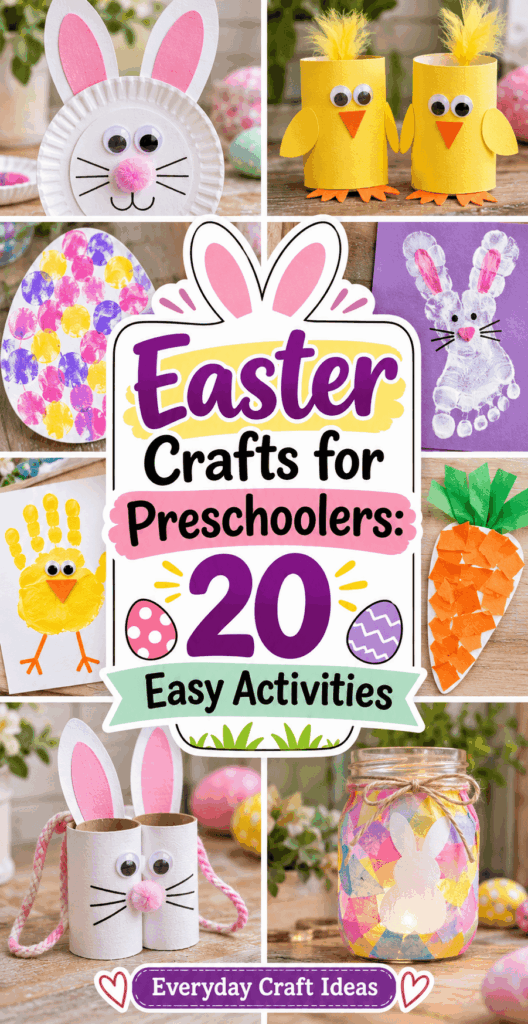
Easter Crafts for Preschoolers: 20 Easy Activities
If you are searching for easter crafts for preschoolers, the best results come from a simple setup: predictable materials, washable adhesives, and projects that finish in one sitting. Plan for short attention spans by pre-cutting a few shapes and offering only 4 to 6 items per table at a time. A small amount of structure also helps children feel successful and keeps cleanup reasonable.
Start with a “core kit” you can reuse across multiple activities: construction paper, cardstock, paper plates, craft sticks, cotton balls, tissue paper squares, child-safe scissors, washable markers, washable paint, glue sticks, liquid school glue, and stickers. For texture, add pom poms, pipe cleaners, and yarn, but introduce them one at a time so kids do not dump everything onto the table.
Before craft time, cover the surface with kraft paper or a plastic tablecloth, place a damp cloth or baby wipes at each station, and set out a drying area. If you are crafting as a family and want something more advanced for grown-ups afterward, you can bookmark these beautiful DIY Easter crafts for adults for later.
Safe supplies for ages 3–5
- Washable glue stick and school glue: Glue sticks are great for paper-on-paper, while a small dot of liquid glue holds cotton balls and pom poms better. Decant glue into small cups for less squeezing and fewer puddles.
- Child-safe scissors: Look for blunt tips and teach “thumb on top.” For younger preschoolers, offer pre-cut shapes so they still get the joy of assembling.
- Washable paint and stamp pads: Tempera or washable watercolor paints clean up easiest. If using stamp pads, choose “washable” and test on a scrap of paper first.
- Large, non-choking embellishments: Avoid tiny buttons or mini pom poms for children who still mouth objects. Choose jumbo sequins, large pom poms, or paper dots instead.
- Allergy-aware materials: If you use real feathers, check for sensitivities. Paper “feathers” or tissue fringe can be a good substitute.
20 ideas and projects to try
These easter crafts for preschoolers are designed to be easy, quick, and flexible. Most can be completed in 10 to 25 minutes with basic supplies, and each one can be adapted for different skill levels by changing the amount of adult prep. If you run a classroom, rotate them across a week: one painting day, one collage day, one stamping day, and a couple of quieter paper projects.
Here are 20 preschool-friendly Easter craft ideas:
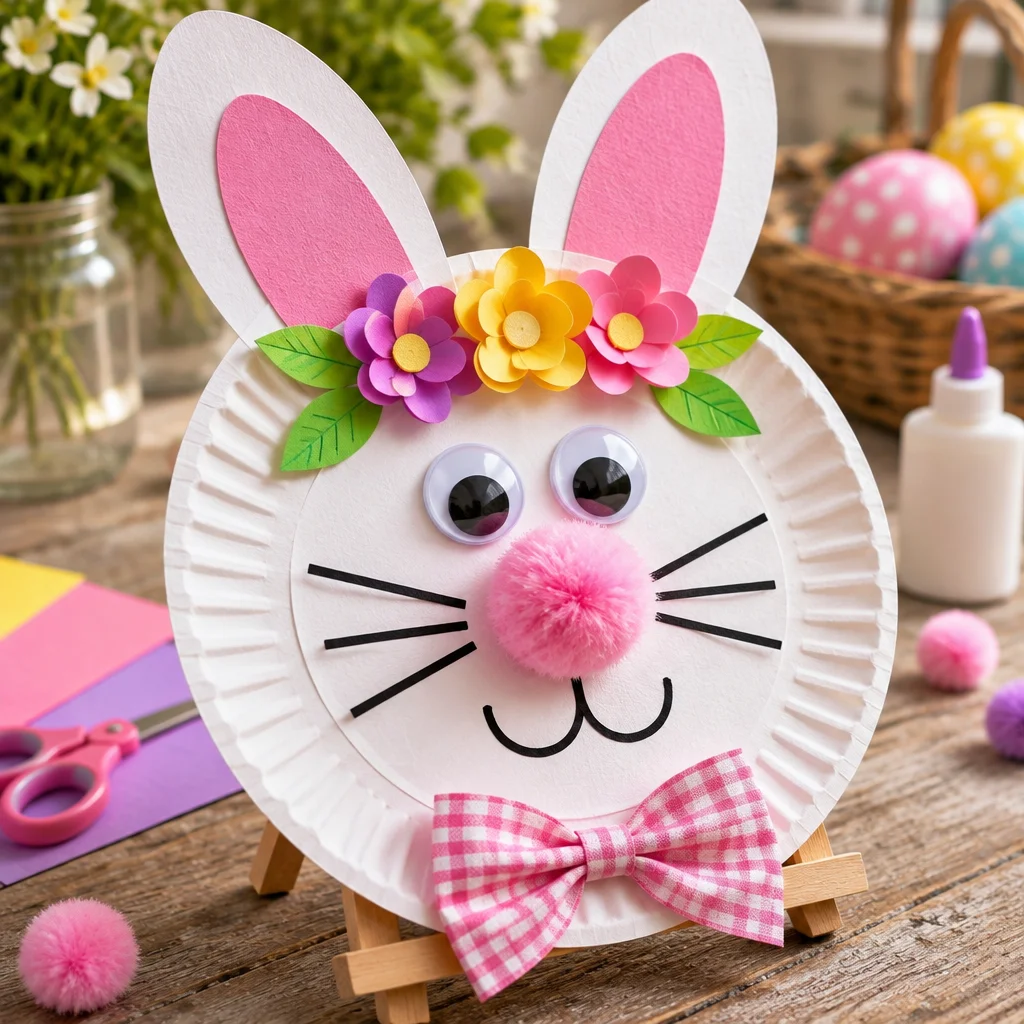
- Paper plate bunny mask: Cut eye holes, add pink nose and paper ears, staple yarn or elastic (adult only).
- Handprint chick: Trace a handprint, paint yellow, add googly eyes and orange beak triangles.
- Tissue paper “stained glass” egg: Tissue squares on contact paper inside an egg frame.
- Cotton-tail bunny collage: Paper bunny shape, cotton ball tail, marker face.
- Basket weaving with paper strips: Pre-cut slits on a basket shape, weave colored strips.
- Egg stamping with potato stamps: Adult carves a simple egg shape, kids stamp patterns.
- Fork-painted grass: Dip a plastic fork in green paint and “print” grass texture.
- Pom pom chick in a “nest”: Yellow pom pom on a glue circle, yarn or paper shred nest.
- Button-free “button” art: Use paper circles instead of buttons to make egg patterns.
- Marble roll eggs: Roll a marble dipped in paint inside a tray with an egg cutout.
- Sticker resist eggs: Stick dots or shapes, paint over, peel when dry.
- Paper chain bunny garland: Make a paper chain and add bunny faces to some links.
- Q-tip polka dot eggs: Dot paint onto an egg outline for fine motor practice.
- Carrot sponge painting: Cut a sponge into a triangle, stamp orange carrots, add green tops.
- Egg carton chicks: Cut cups from a carton, paint yellow, add beak and eyes (adult cuts).
- Salt dough egg ornaments: Adult mixes dough, kids press cookie cutters and decorate (air dry).
- Spring flower egg cards: Egg-shaped card with fingerprint flowers.
- Bunny footprint art: Paint the bottom of a toy or use cut foam shapes to stamp footprints.
- Nature egg collage: Glue small leaves and petals onto a paper egg.
- “Cracked egg” chick reveal: Fold paper egg, cut zigzag crack, add chick face inside.
Paper plate bunnies, handprint chicks, tissue eggs, cotton-tail collages, basket art and stamping
If you only have time for a few classics, start here. Paper plates hold paint well and are sturdy for little hands. Handprints turn into instant keepsakes. Tissue eggs build patience without needing perfect cutting skills. Collages are excellent for sensory seekers, and stamping is a quick win for children who get frustrated drawing shapes.
For more seasonal ideas beyond Easter, you might also like these winter crafts for preschoolers to keep your craft bin working all year.
How to make and customize the projects
To help you actually complete these easter crafts for preschoolers without stress, use a repeatable process: choose one base (plate, egg outline, or cardstock), choose one technique (paint, collage, stamping), then add one feature (ears, beak, tail, or basket handle). This keeps the activity focused and avoids the “too many choices” meltdown.
Use this step-by-step framework for most projects on the list:
- Pick the base and pre-cut key shapes: Cut egg outlines, bunny ears, beaks, and basket handles before kids sit down. This shortens waiting time and prevents jagged cuts that frustrate beginners.
- Demonstrate one technique at a time: Show how to dab glue (not smear a lake), how to pounce paint with a sponge, or how to stamp straight down and lift up. Preschoolers learn best by copying a single clear motion.
- Set a “just enough” material rule: Put five cotton balls in a small bowl, not the whole bag. Refill as needed. You will reduce dumping and keep projects from becoming too heavy to dry.
- Add facial features last: Eyes and smiles look best when the background is dry. If kids add faces first, paint and glue often smear them.
- Finish with a name and date: Write names on the back while the child tells you what they made. This turns simple crafts into meaningful keepsakes.
Low-mess classroom stations and sensory activities
For low-mess stations, swap liquid glue for glue sticks, use stickers instead of loose glitter, and offer paint only at one supervised table. A “collage station” can include pre-torn tissue, paper circles, and foam shapes. A “stamp station” can include one color at a time to limit muddy prints. Sensory-friendly options include cotton-tail collages, paper weaving, and Q-tip dotting, all of which feel hands-on without being runny.
Adult prep, drying time and display
Adult prep is the secret to calm crafting. Pre-cut 10 to 20 egg shapes, ears, and basket handles. Put paints in shallow trays and tape paper to the table for children who slide their work around. Most paper crafts dry in 10 to 20 minutes; thicker items like cotton balls or egg carton paint may need 30 to 60 minutes. For display, string a garland with clothespins, tape eggs into a window, or mount finished art onto cardstock “frames.”
Supplies, cost, time and skill level
Most easter crafts for preschoolers use inexpensive basics you may already own. If you are stocking up from scratch, a realistic starter budget is modest because paper, glue, and washable paint stretch across dozens of projects. The biggest cost saver is choosing multipurpose items: one pack of paper plates can become masks, chick faces, and baskets. Tissue paper works for eggs, flowers, and “stained glass” windows. If you enjoy working with soft materials, felt is also beginner-friendly; this guide to felt crafts for beginners can help you expand your toolkit.
- Time: 10 to 25 minutes for most paper projects, 30 to 60 minutes for painted 3D items (plus drying).
- Skill level: Beginner. Children can do the gluing, stamping, painting, and decorating; adults handle cutting and any stapling.
- Best group size: 1 to 6 children per adult for paint and glue projects. Collage and stickers can handle larger groups.
- Where they work best: Kitchen tables, classrooms, and outdoor patios. Avoid carpet if you are using paint.
Beginner mistakes and troubleshooting
- Wrinkled paper from too much glue: Use a glue stick for paper layers. For liquid glue, teach “dot, dot, not a lot.” If it wrinkles, press with a clean paper towel and let it dry flat.
- Paint turning brown: Offer fewer colors at once and encourage rinsing brushes. Stamp straight down, not swirled, to keep colors crisp.
- Pieces sliding off: Cotton balls and pom poms need thicker glue and a little drying time. Hold in place for 5 to 10 seconds or use tacky glue with close supervision.
- Tears when peeling sticker resist: Wait until paint is fully dry, then peel slowly. Use painter’s tape or larger stickers for easier removal.
- Kids losing interest halfway: Choose a “finish line” such as “add eyes and one decoration.” It is better to complete a simple craft than abandon an overcomplicated one.
“I tried the tissue paper stained-glass eggs with my preschool class and it was the first craft all year that every child finished. Pre-cutting the egg frames the night before made a huge difference, and the window display looked amazing.”
Frequently Asked Questions About Easter Crafts for Preschoolers: 20 Easy Activities
What Easter crafts can preschoolers make?
Preschoolers do best with crafts that rely on simple motions: stamping, dabbing paint, gluing big pieces, and placing stickers. Great options include paper plate bunnies, handprint chicks, tissue paper eggs, cotton-tail collages, and egg outline cards. Look for projects with one main technique and a clear end point. If you want to extend the activity, add a story or song while the crafts dry.
What can a 3-year-old make?
A 3-year-old can successfully make an egg collage, sticker-decorated eggs, a simple bunny face on a paper plate, or Q-tip dot eggs. The key is adult prep: pre-cut shapes, pour small amounts of glue, and offer only a few choices at once. Let them practice independence by placing pieces themselves, even if the results are not symmetrical. Process matters more than perfect outcomes at this age.
Which Easter activities are mess-free?
Truly mess-free is rare with preschoolers, but you can get close. Choose glue sticks, stickers, and crayons instead of paint and liquid glue. Try paper weaving baskets, paper chain bunny garlands, sticker resist eggs using crayons (color over stickers, then peel), and collage with large pre-cut paper pieces. Keep a “finished bin” for completed work so kids do not continue touching wet glue.
How do I keep crafts safe for kids who still mouth materials?
Avoid small loose items like mini pom poms, tiny buttons, and small googly eyes. Use drawn eyes or larger paper circles instead. Supervise closely and choose bigger materials: jumbo cotton balls, large tissue pieces, and wide paper strips. If you are uncertain, stick with paper-only crafts like plate bunnies, egg cards, and basket weaving. Always check labels for age guidance on craft kits and adhesives.
What glue works best for preschool Easter crafts?
Use glue sticks for most paper layers because they are clean, fast, and less likely to wrinkle. Use liquid school glue for 3D elements like cotton balls, pom poms, yarn, and egg carton pieces. If something keeps falling off, apply a small dot of thicker glue and hold for a few seconds. For classrooms, pour glue into small cups and offer cotton swabs for controlled application.
How can I make these crafts feel like a full Easter activity?
Turn crafting into a mini “Easter makers morning.” Start with a quick picture book, then do one main craft and one quick add-on like stamping a card or making a paper chain garland. End with a simple display moment: hang finished eggs in a window or create a hallway gallery. If you want more holiday crafting inspiration for later in the year, browse these Christmas crafts for kids for similarly easy, festive projects.
Final tips and next projects
The best easter crafts for preschoolers are the ones that match your child’s attention span and your cleanup comfort level. Keep the win rate high by prepping key shapes, limiting materials on the table, and choosing one main technique per project. Remember that a bunny with crooked ears is still a success if your preschooler practiced cutting, gluing, and finishing something they are proud to show off.
For your next step, pick three activities from the list and set up a simple rotation: one collage, one stamping or painting project, and one paper craft like a basket weave. If you are crafting alongside older kids or adults, you can also explore more advanced spring makes with these Easter craft ideas for adults to make at home. Save leftovers in labeled zip bags so you are ready for a quick craft session anytime.