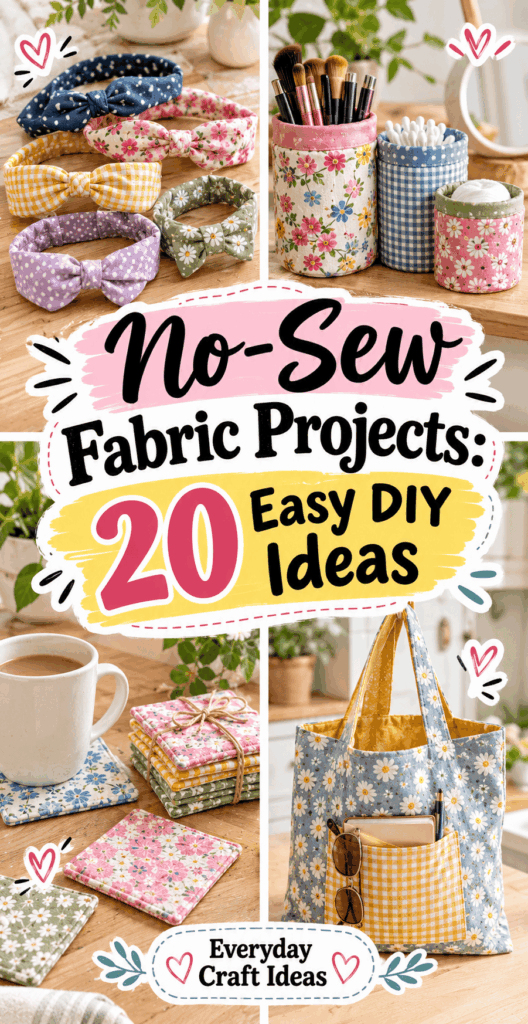
No-Sew Fabric Projects: 20 Easy DIY Ideas
No sew fabric projects are the fastest way to turn pretty fabric into something useful without owning a sewing machine. If you have a pair of sharp scissors and a little patience, you can make gifts, home decor, and organizing tools that look polished and hold up to everyday use. This guide focuses on beginner-friendly methods like tying, wrapping, and using fabric-safe adhesives so you can actually finish what you start.
If you do have scraps piling up, you might also like these useful scrap fabric ideas for inspiration. And if no-sew projects make you curious about stitching later, bookmark these easy sewing projects for beginners for the next step up.
What you need to get started
Most no sew fabric projects succeed or fail based on two things: the right fabric and the right “joining” method. Before picking a project, decide whether your item needs to be washable, weight-bearing, or purely decorative. A tied fleece blanket can take heavy use, while a glued ribbon trim is best for light handling.
Here is a practical starter kit that covers nearly every project in this article:
- Fabric scissors or a rotary cutter: Clean cuts matter. Jagged edges fray faster and make wrapped projects lumpy.
- Cutting mat and ruler (optional but helpful): Great for straight strips, fringe, and evenly sized squares.
- Fabric glue and/or hot glue: Fabric glue stays flexible and is better for washable items; hot glue grabs fast for decor.
- Fusible web or hem tape (iron-on): Excellent for crisp hems, appliqué, and quick bonds on cotton and blends.
- Clips or clothespins: Use them like “pins” while glue sets, without poking holes in the fabric.
- Measuring tape and fabric chalk: Helps prevent the classic beginner problem of “two pieces that were supposed to match.”
No-sew tools, adhesives and fabric choices
Choose fabric based on how it behaves when cut. Fleece and felt are forgiving because they do not fray, making them ideal for no sew fabric projects like blankets, pillows, and soft baskets. Quilting cotton frays, but works beautifully when you use fusible tape, pinking shears, or fold-over hems. Stretchy knits can curl and distort, so they are best for wraps, headbands, and projects where a little stretch helps.
Adhesive matters too. Use fabric glue for flexible seams and hems, especially on wearables. Use hot glue for wreaths, decor, and quick assembly on rigid surfaces, but avoid it on anything you plan to wash often since it can re-melt with heat. Use fusible web or hem tape for neat edges and strong, flat bonds; always follow the heat setting for your fabric so you do not scorch it.
20 ideas and projects to try
Below are 20 no sew fabric projects that range from 10-minute wins to weekend crafts. For each, I’ve added what it’s best for so you can pick based on your goal: gifts, home use, organizing, or decor. If you want a deep dive on one classic, see this step-by-step no-sew fleece blanket tutorial.
- Tie fleece blanket: Cozy, washable, and perfect for beginners.
- Double-tied fleece pillow cover: Make an envelope-style cover using knots instead of seams.
- No-sew knotted floor cushion: Use sturdy canvas or fleece; great for kids’ rooms.
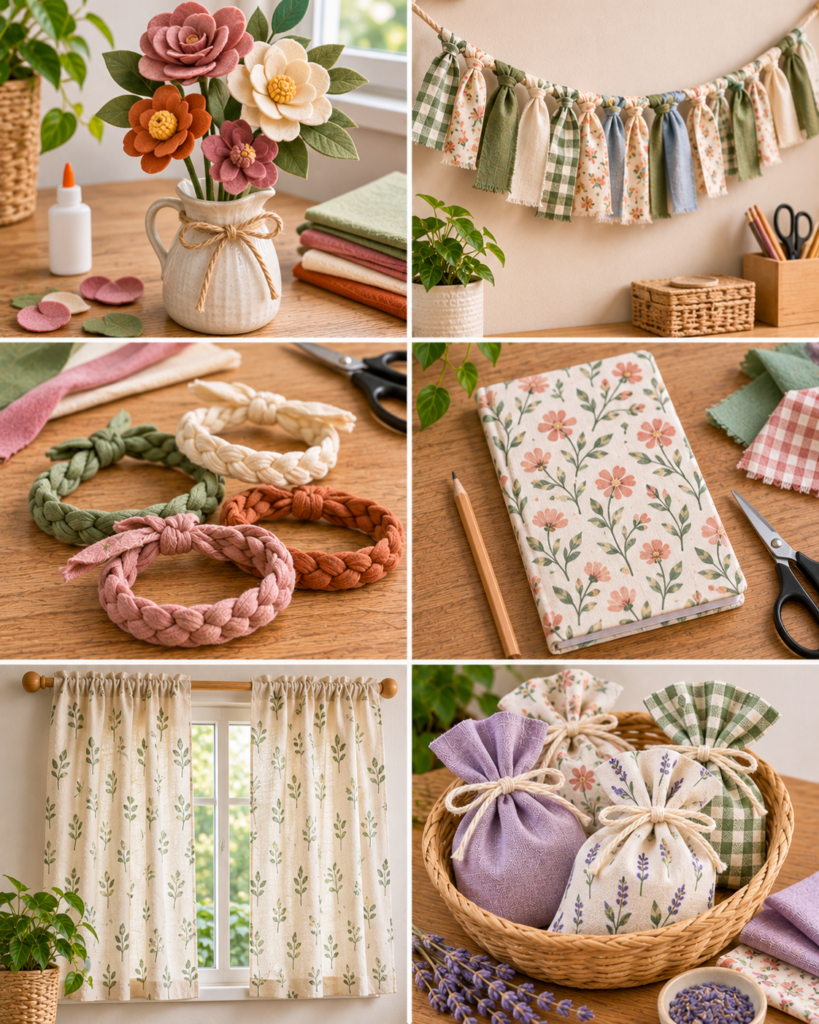
- Fabric scrap garland: Tie strips onto twine for parties or seasonal decor.
- Fabric bunting: Triangles backed with fusible tape for crisp flags.
- Wrapped hangers: Wrap fabric strips around hangers for a boutique closet look.
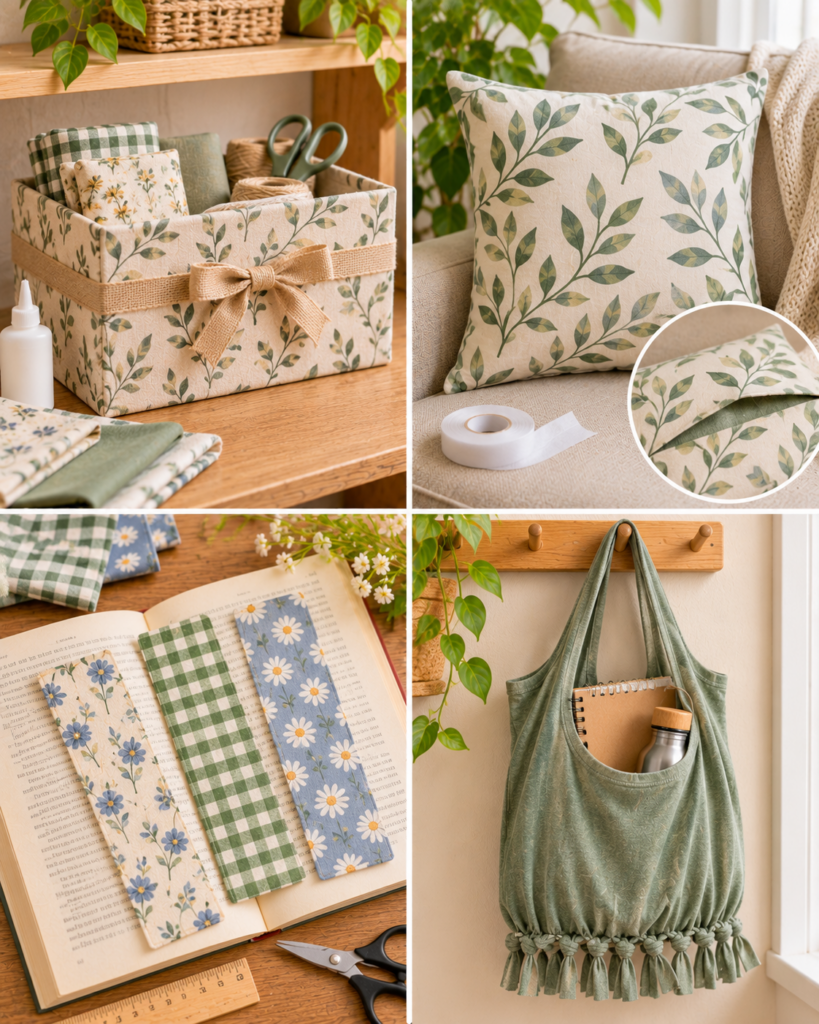
- Fabric-covered storage boxes: Upgrade plain cardboard with glue and smooth folds.
- No-sew fabric coasters: Layer felt and cotton with fusible web.
- Fringe scarf from fleece: Cut and fringe the ends; no hemming required.
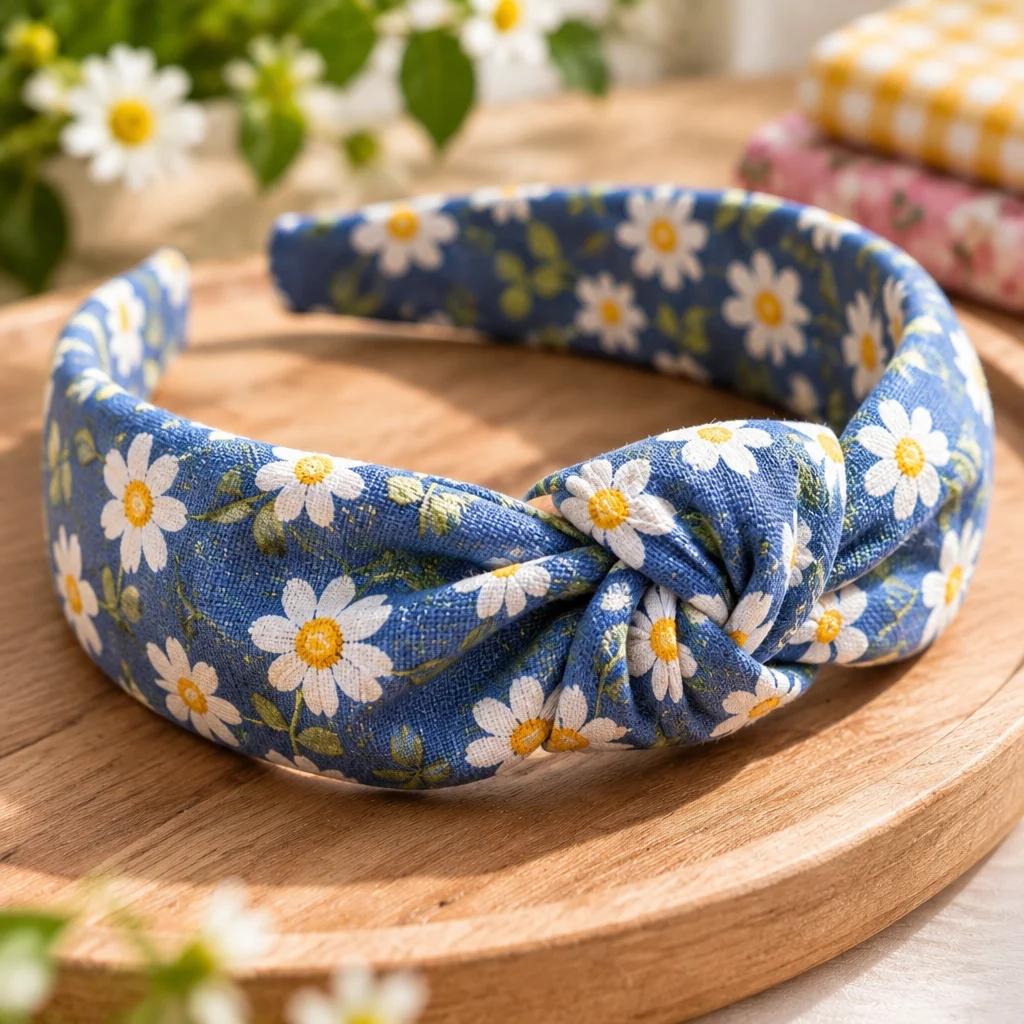
- No-sew headbands: Use knits and a simple twist or knot.
- Bandana pet collar slide-on: Fold and glue a casing to slip onto a collar.
- Simple tote (glued seams): Better for light items like craft supplies or library books.
- Drawer sachets: Fill with lavender and close with ribbon ties.
- Fabric flowers: Fold and glue circles into rosettes for clips or wreaths.
- Appliqué tee refresh: Fuse shapes onto a plain shirt using fusible web.
- Patchwork-style placemats (fused): Fuse strips, then finish edges with hem tape.
- No-sew soft book cover: Wrap and glue fabric around a notebook for a custom look.
- Phone charging cord keeper: Glue fabric around a snap tab or Velcro strip.
- Gift wrap alternative: Use a fabric square tied furoshiki-style.
- Seasonal fabric wreath: Tie strips onto a wire form for big volume fast.
Fleece blankets, tied pillows, fabric wreaths, wrapped hangers, bunting and fabric-covered boxes
If you want the most reliable “first win,” start with fleece. A tie blanket works because the knots create a mechanical hold that does not rely on glue. For tied pillows, use two same-size squares, leave an opening, stuff firmly, then knot closed; tighter stuffing reduces sagging and makes knots look cleaner.
Fabric wreaths and wrapped hangers are excellent for using long strips. Cut strips with consistent width so the wrapping stays smooth and even. For bunting, fusible web is your friend: it keeps flags crisp and prevents frayed edges if you fold the triangle edges inward before fusing.
Fabric-covered boxes look store-bought when you smooth fabric from the center outward, and clip the corners like you would wrap a present. The key is using a thin layer of glue so the cardboard does not warp.
How to make and customize the projects
The basic workflow for most no sew fabric projects is: plan the size, prep the fabric, choose the joining method, then finish edges so your project lasts. Customization is where the fun is, but it works best when the structure is solid first. Use this universal method to adapt almost any idea above.
- Pick the end use and choose a fabric that matches it: Fleece or felt for raw edges, cotton for crisp decor, canvas for sturdier organizers. This prevents frustration later.
- Prewash when washability matters: Cotton can shrink. Prewashing avoids puckers and weird sizing after your first wash.
- Square up and measure twice: Even a quarter-inch difference shows on bunting and pillow covers. Use a ruler and chalk for straight guides.
- Test your bond method on a scrap: Try glue, fusible tape, or tying. Check if glue bleeds through or if the iron setting is safe.
- Assemble from the center out: For box covers and wraps, smoothing outward pushes bubbles and wrinkles away rather than trapping them.
- Finish edges appropriately: Use fringe, folded hems, pinking shears, or binding. A neat edge is what makes no-sew look intentional.
- Let adhesives cure fully: Fabric glue often needs 24 hours to reach strength. Moving the project too soon is the main reason seams peel.
For a fun paper-and-fabric pairing, you can also combine these skills with simple notebooks. This beginner bookbinding guide is a great next craft if you enjoy covering and decorating.
Glue versus fusible tape versus tying
Glue is best for hems, trims, and bonding fabric to rigid surfaces. Choose fabric glue for flexibility and a softer feel; it is ideal for headbands, appliqué edges (when you cannot iron), and light totes. Apply in a thin line, press firmly, and clamp with clips until set. Too much glue causes seep-through and stiff edges.
Fusible tape or web is the cleanest option for flat seams and polished hems. It is perfect for bunting, placemats, and fabric-covered notebooks. Always protect your iron with a pressing cloth, and keep the iron moving only when the instructions allow it. Most fusibles require pressing and holding, not ironing back and forth.
Tying is the most durable for thick fabrics like fleece. It is also the safest option for kids’ crafts since it avoids hot tools. The tradeoff is bulk: knots add texture and thickness. If you want less bulk, cut thinner fringe or use double knots spaced farther apart.
Durability, washability and beginner tips
Durability depends on stress points. Handles, corners, and openings need reinforcement. For a glued tote, add a second strip of fabric as a “tape” over the inside seam to distribute weight. For bunting, reinforce the top edge with fusible tape before attaching to ribbon or bias tape.
Washability is easiest with tying and with fusible products labeled washable. Fabric glue can be washable, but only if it is specifically labeled for laundering and fully cured. Avoid washing hot-glued items; use them as decor instead.
Beginner tip that saves projects: keep a clean damp cloth nearby. If glue seeps out, blot immediately. Rubbing spreads glue into fibers and can leave shiny patches.
“I made a tied fleece pillow cover from leftover blanket pieces, and it actually looks neat on my couch. The biggest help was clipping the layers before knotting so everything stayed lined up.”
Supplies, cost, time and skill level
One reason no sew fabric projects are so popular is that they scale to your budget. You can start with dollar-store fleece throws, thrifted fabric, or scraps from other crafts. A basic bottle of fabric glue and a pack of fusible hem tape go a long way. If you already own scissors, you can complete several projects for under the cost of one sewing pattern.
Here is a realistic planning guide:
- 10 to 25 minutes: wrapped hangers, fabric garland, sachets, fringe scarf, gift wrap squares.
- 30 to 60 minutes: coasters, bunting, fabric flowers, covered boxes, simple headbands.
- 1 to 3 hours: tied pillow covers, no-sew placemats, light-duty totes, wreaths with lots of strips.
Skill level is mostly about measuring and patience. The easiest projects use fleece or felt because you can cut and go. Cotton projects look more tailored, but they require neat edge finishing and careful pressing.
If you want to expand your handmade skills beyond fabric, try a fiber craft alongside these projects. This roundup of crochet projects for beginners pairs well with fabric crafts for cozy home items.
Beginner mistakes and troubleshooting
Problem: Glue soaks through and leaves spots. Use less glue and spread it thinly with a scrap of cardboard. Choose thicker fabric or use fusible tape instead for light cotton.
Problem: Edges fray quickly. Switch to fleece or felt for raw edges, or finish cotton edges by folding a narrow hem and bonding with hem tape. Pinking shears reduce fraying but are not a full replacement for a hem on high-wear items.
Problem: Pieces do not line up. Square your fabric first. Fabric off the bolt can be skewed. Use a ruler to true the edge, then measure from that straight edge.
Problem: Fusible tape will not stick. Your iron may be too cool, or you are moving it instead of pressing. Press and hold for the full time, and make sure you are fusing to the correct side (adhesive side down).
Problem: Knots loosen on fleece. Cut longer fringe and use a firm double knot. Also avoid very narrow fringe, which can “cheese-wire” and stretch out.
Frequently Asked Questions About No-Sew Fabric Projects: 20 Easy DIY Ideas
How can I make fabric crafts without sewing?
You can replace stitches with three main methods: tying (best for fleece), bonding with fusible tape (best for clean hems and flat seams), and fabric glue (best for trims, repairs, and bonding to rigid surfaces). Many no sew fabric projects combine methods, such as fusing a hem first and then gluing trim on top. Start with a project that matches your fabric, since non-fraying fabrics allow the simplest construction.
Does fabric glue survive washing?
Some do, but you must check the label. Look for fabric glue marked “machine washable” or “launderable,” and follow the cure time, which is often 24 to 72 hours. Even then, glued seams generally last longer if washed cold and air-dried. Avoid high heat, which can soften adhesives. For the most washable no-sew option, use tying on fleece or washable fusible web for hems and appliqué.
What fabric is easiest to use?
Fleece and felt are the easiest because they do not fray and they hide small cutting mistakes. They are ideal for blankets, pillows, garlands, and soft storage. Quilting cotton is easy to cut accurately, but it needs edge finishing for durability. Knits can be beginner-friendly for headbands and simple wraps, but they stretch and curl, so they are less forgiving for crisp decor like bunting.
Can I make wearables with no-sew methods?
Yes, but choose the method carefully. Fusible web works well for hems, patches, and appliqué on shirts and skirts, while fabric glue can secure small details. Keep structural stress low: no-sew wearables are best as accessories like headbands, scarves, poncho-style wraps, and costume pieces. If an item must support weight or repeated strain, use tying, add reinforcement layers, or consider a few simple hand stitches.
Is hot glue safe to use on fabric?
Hot glue is safe for many fabrics, but it can soak into thin cotton and create hard, scratchy spots. It also sets quickly, leaving less time to reposition. Use hot glue mainly for decor like wreaths, fabric flowers, and covering boxes. Work on a heat-resistant surface, keep fingers protected, and unplug the gun when you step away. For kid-friendly crafting, choose fabric glue or tying instead.
How do I keep no-sew projects looking neat and not “crafty”?
Neat no-sew results come from clean cutting, smooth bonding, and thoughtful finishing. Press folds before fusing or gluing, trim stray threads, and hide raw edges whenever possible by folding them under. Match adhesive to the job so you avoid stiff glue ridges. Finally, take time with symmetry: evenly spaced knots, consistent strip widths, and centered designs make even simple no sew fabric projects look intentional.
Final tips and next projects
The best no sew fabric projects start with realistic expectations: pick a fabric that behaves well, choose a joining method that matches how the item will be used, and give adhesives time to fully cure. If you are brand-new, begin with a tied fleece blanket, wrapped hangers, or a fabric-covered box to practice measuring and clean finishing. Then move on to bunting, placemats, and simple accessories once you are comfortable with fusing and gluing. Keep your scraps, too. Small pieces become garlands, flowers, and coasters quickly. Choose one idea from the list, gather your materials today, and aim to finish it in one sitting. Momentum is your best crafting tool.